
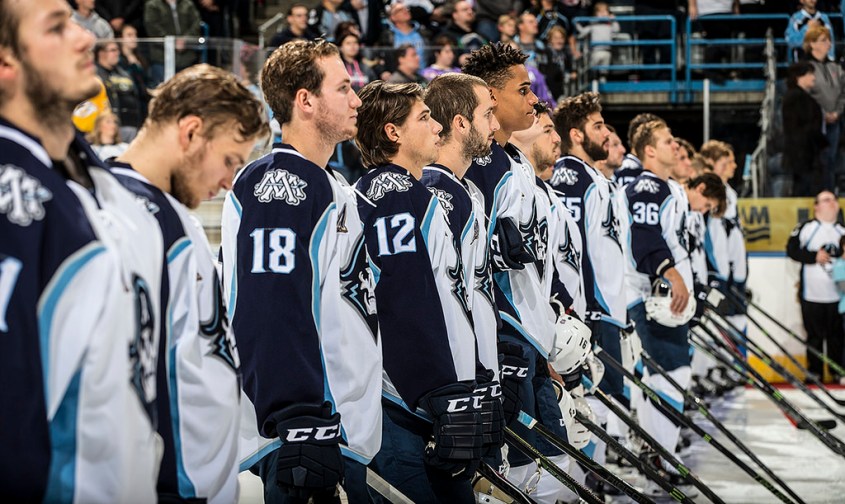
This time a year ago was either gloomy or so far gone from what happened to the Milwaukee Admirals that it wasn’t even worth giving much of a thought back on. The Admirals finished dead last in the Midwest Division and saw the franchise’s streak of twelve consecutive playoff appearances come to an end. That was the 2014-15 season. This was the 2015-16 season and I feel it might be something we will all keep coming back to for numerous reasons. It was a special season on and off the ice.
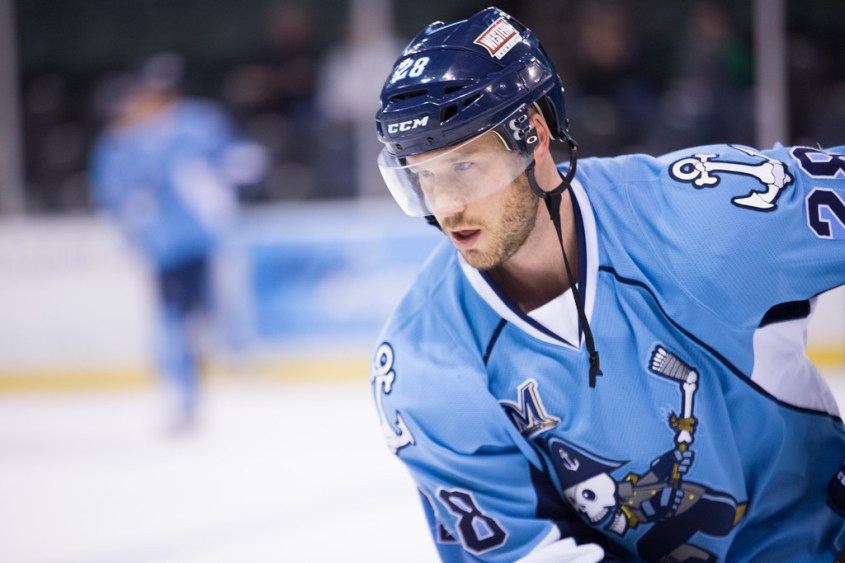
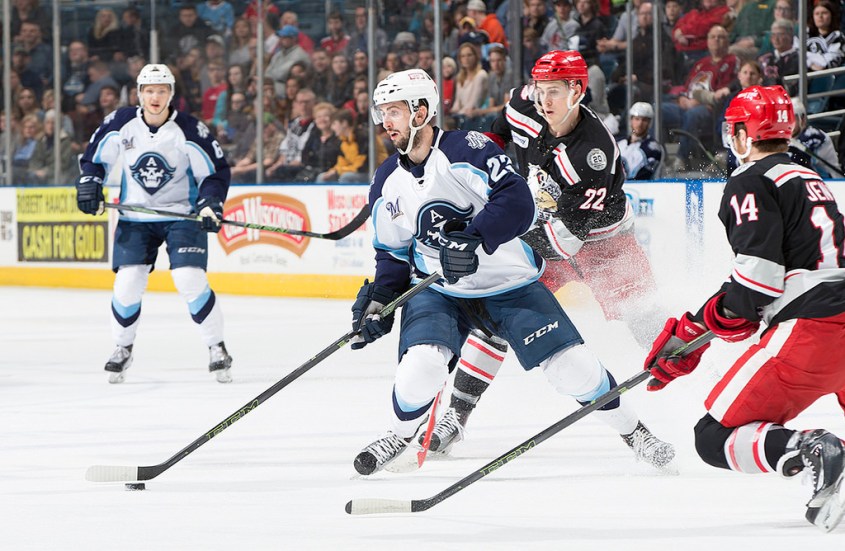
If there was any great way to shake off the cobwebs that came with the 2014-15 season it actually came in the form of an image change. The Milwaukee Admirals officially unveiled a rebranding effort in mid-July of 2015 which saw new logos, colors, and uniforms. It wasn’t too far removed from the previous look but something that combined all previous installments to create something that felt perfect.
That was one area that made this season unique right away. If that wasn’t enough this season turned out to be the last for the Milwaukee Admirals playing in the Bradley Center. It was a 28-year long journey. The Pettit family had that building built for the purpose of professional hockey. And they succeeded at doing that. It may not have been NHL hockey but it was Milwaukee hockey whether it be played in the IHL or AHL.
When reflecting back on what was the Milwaukee Admirals last season as tenants of the Bradley Center you really can’t help but smile. The Admirals started the season with the second youngest team in the entire league and exceeded expectations. The year prior? A last place finish in the division. Those that were part of that team had to have taken great satisfaction in knowing their improvements and contributions ended with the reward of the Admirals first divisional title since the 2010-11 season.
There are many several talking points from what the Admirals record was alone. Yes, that divisional title was impressive but attaining a record of 48-23-3-2 (101 points) put this year’s Admirals team in rarefied air among the franchise’s AHL history. Their 101 points was the first time since the 2010-11 season that the Admirals eclipsed 100 points in a season and the sixth such occurrence of that feat happening. Yet, in the five previous 100+ point seasons for the Admirals those were contested when the AHL played an 80-game regular season. The 2015-16 Admirals became the first team in franchise history under the AHL’s 76-game regular season schedule to eclipse 100 points. This actually gives that term of the past season “points percentage” a great use because it quantifies how this year’s Admirals stacked up against the 14 previous squads that came before them. The 2015-16 Admirals 0.664 points percentage slots them in as the third best team in the Admirals AHL history behind the 2005-06 team (0.675 points percentage) and 2008-09 team (0.669 points percentage). That means your head coaches at the top of that list reads: Claude Noël, Lane Lambert, and Dean Evason. You can say the same for wins, as well. The Admirals 48 wins were the most ever from a 76-game regular season and was second to the aforementioned two teams which earned 49-wins from an 80-game regular season.

So much praise should be given to the job that Evason and his coaching staff, consisting of Stan Drulia and Scott Ford, did in 2015-16. I have to imagine there was a weight on the Admirals coaching staff at the start of the season. Knowing how last season ended the first month of the season saw the Admirals go 2-4-1-0 while conceding 3.9 goals per game and scoring 2.1 goals per game. It wasn’t all that pretty. That was October. Then came a franchise record 10-game winning streak. From that point on the Admirals seemed to have grabbed a firm hold of their identity and stuck to it regardless of injuries, roster moves, random additions on PTO basis from the ECHL, and on and on the roster swirled but the team stayed on target to earn results. That only happens because of two key points: great coaching and a great leadership group from within the locker room. That balance was felt very quickly and was responsible for such a strong season.
Another point to make of the coaching staff this season was their short leash on all players in the locker room who made stumbles off the ice. There were a few occasions in which players were late to a practice or team meeting and the result of doing that led to team mandated suspensions that lasted, typically, one-game. This didn’t matter if you were a first round draft pick, the recent record setting for most goals scored in a KHL season, or a veteran. Accountability to professionalism was held to that standard. Acting in that manner at the NHL level isn’t going to yield a lot of respect so, regardless of age or profile, the lessons needed to be learned through swift in-house punishment. Just because you’re on the road to Nashville shouldn’t mean you’re above acting lackadaisical in going about day-to-day pro hockey operations. Call it your short term slap on the wrist but a long term lesson learned.
If there were another lesson learned it would come from the whole of the organization and how it structures a defense in the AHL. Early into the 2015-16 season the Admirals found themselves in a place similar to the year prior with only one right-handed shot (Taylor Aronson) out of their defensive group. You would have thought, if that was an issue, it would have been handled going into this past season but players such as Kristian Näkyvä, Conor Allen, and Trevor Murphy to join a mix of Johan Alm, Jonathan Diaby, Garrett Noonan, and Jimmy Oligny. That doesn’t even account for the addition of Victor Bartley who would clear waivers and reach Milwaukee to add yet another lefty to the mix. Where this put the Admirals wasn’t necessarily in a bad place but it clearly wasn’t something that the coaching staff felt was working as efficiently as it could be. This led to three eventual acquisitions that shook up the defense with Patrick Mullen, Stefan Elliott, and Corey Potter joining the ranks. This finally allowed the Admirals to roll three lefties and three righties on defense. In fact, late in the season it actually meant one of the rarest sightings I can remember seeing from an Admirals team: a defensive pairing of righty-righty. You can’t argue with the impact that this had on the Admirals season. From the debut of Mullen on 1/15/16 in San Antonio the Admirals record was 25-10-1-2. From the debut of Potter in the Admirals roster on 3/3/16 in Lake Erie the team’s record was 15-4-0-2. It begs the question then, if this three righties split on defense was something that Evason wanted to have so much, why weren’t those changes made all the way before the season started? I’m going to take a wild guess that mistake doesn’t happen once again for the start of the 2016-17 season.
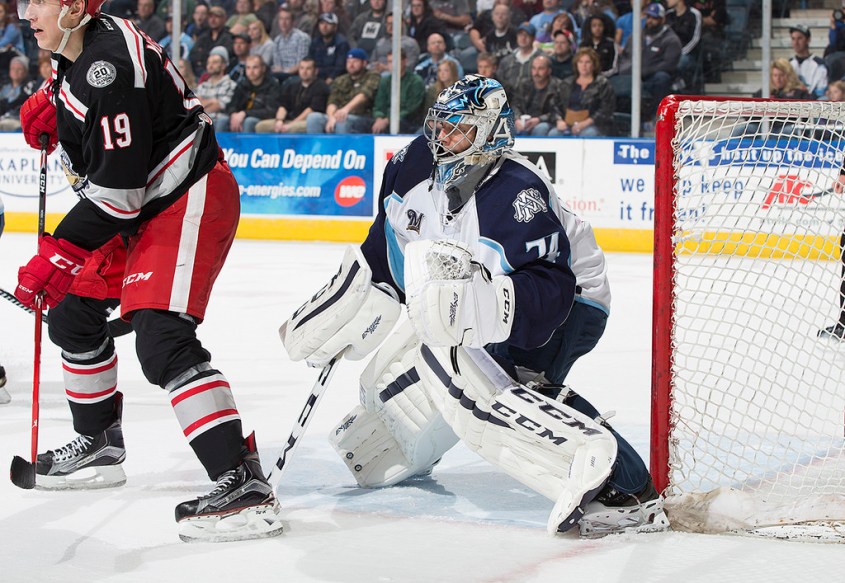
For all that the regular season had going for it. For the incredible late season run that the Admirals put together in which the team matched a franchise record with a thirteen game point streak. The 2016 AHL Calder Cup Playoffs ended as they have so often in recent memory for the Admirals. It was a first round playoff exit and one that went without a win. With the AHL’s mind boggling regular season structure, allowing Californian teams to play eight less games than the rest of the league, the same level of “whatever” was given to a restructured playoff format. The Admirals finished the regular season with the second best record in the Western Conference. They didn’t face the team with the seventh best record in the Western Conference. Instead things were bracketed to Central Division and Pacific Division which meant the Admirals going up against the dreaded Grand Rapids Griffins who routinely over-matched the Admirals in the regular season. Guess what? That happened again in the playoffs and it meant an early exit filled with anger, more anger, and an almost unhealthy amount of anger. What if? What could have been? Why? Oh well.
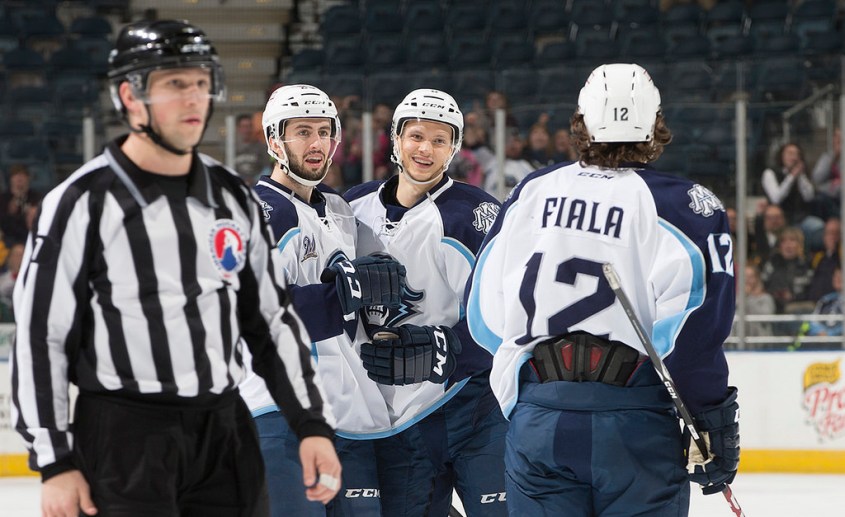
As much as I’m sure everyone wanted this year’s Admirals team to have a playoff payoff on what was a highly successful regular season the fact remains that this is a developmental team. While achievements in the trophy room or rafter banners department might have gone begging that isn’t a fair assessment of success. Look at the Nashville Predators in recent years and you’ll see just why recent up and down Admirals seasons haven’t necessarily meant failure. The Admirals are creating solid NHL level talent. This season featured an incredibly young team who were all provided an incredible amount of high level professional playing experience. It’s something that may not be felt instantly but the years to come might just show a season such as this setting the stage for some special moments in the careers of Juuse Saros, Vladislav Kamenev, or Kevin Fiala. Sometimes you need some struggles and adversity to learn what is needed to overcome and succeed. I feel that the regular season featured several bouts of that for the Admirals, both individually and as a team, but the playoffs just handed a cold plate of disappointment for everyone. It’s the coming season that will define just how everyone responds to the lesson that the 2016 AHL Calder Cup Playoffs provided.
~End Season Awards~
Most Valuable Player: Félix Girard
Rookie of the Year: Juuse Saros
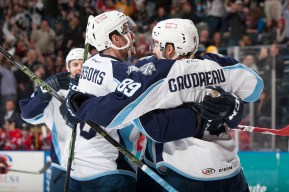
Best Forward: Frédérick Gaudreau
Best Defensemen: Jimmy Oligny
Best Goaltender: Juuse Saros
Most Impressive Player: Juuse Saros
Least Impressive Player: Kristian Näkyvä
Most Improvement: Frédérick Gaudreau
Least Improvement: Jonathan Diaby
Nashville Bound Next Season: Pontus Åberg
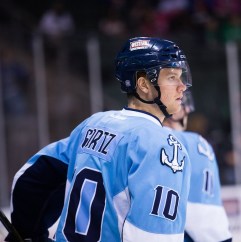
Player to Watch Next Season: Max Görtz
Rookie to Watch Next Season: Justin Kirkland
Sophomore to Watch Next Season: Vladislav Kamenev
~Report Card~
It’s always important for me to preface any of these report cards I conduct by stating the following. These grades are purely my own judgement with no serious methodology of what classifies one grade over another grade. In the past I felt it was only fair to grade an “incomplete” to players that didn’t play a minimum of half the games that the Admirals played during the regular season or logged significant time with the Nashville Predators (NHL) or Cincinnati Cyclones (ECHL). That would mean 38 games worth of playing time. Considering a handful of players would come just shy of that mark I am lowering that bar to 25 games. That makes the grading cut-off right around one-third the total amount of possible games played in an AHL season.
The short and sweet of it: Any player who played 25 games or more with the Milwaukee Admirals during the 2015-16 season will be receiving a letter grade based on my assessment of their performance. Anything less than 25 games will be ruled an incomplete.
Of note. I reached out to get some added perspective for those players that did log significant time elsewhere this season from those with eyes and ears on the product. Those people would be none other than Cutler Klein of Penalty Box Radio and Dakota Johnson of Sin Bin Cyclones.
For the sake of reader convenience I will be listing the players based on their uniform numbers that were worn this past season with the Admirals.



 Admirals Roundtable